Mining
RIISS00034

Surface Coal Mine Safety Skill Set (Standard 11)

Gain the essential safety skills and knowledge required to work in surface coal mining operations. RIISS00034 Surface Coal Mine Safety Skill Set (Standard 11) provides the foundational training required for entry into many coal mine sites and mining-related roles.


Course Outline

RIISS00034 Surface Coal Mine Safety Skill Set, commonly known as Standard 11, is a nationally recognised skill set that provides the core safety training required for individuals working in, or seeking entry to, Queensland surface coal mining operations. The skill set addresses the requirements of Recognised Standard 11 and is widely recognised across the coal mining industry as a key entry requirement for site access and employment.

The course develops the fundamental skills and knowledge required to work safely within a surface coal mining environment, including workplace communication, risk management, work health and safety requirements, site procedures, emergency response, and initial first aid. Participants learn how to identify and control workplace hazards, comply with site safety requirements, respond to incidents and emergencies, and contribute to a safe and productive work environment. Upon successful completion, learners will receive a nationally recognised Statement of Attainment for RIISS00034 Surface Coal Mine Safety Skill Set.

Teaching Units

Elective Unit
Core Unit
Thank you! Your submission has been received!
Oops! Something went wrong while submitting the form.
Core Unit
RIICOM201E - Communicate in the workplace
Core Unit
RIIERR205D - Apply initial response First Aid
Core Unit
RIIERR302E - Respond to local emergencies and incidents
Core Unit
RIIGOV201E - Comply with site work processes/procedures
Core Unit
RIIRIS201E Conduct local risk control
Core Unit
RIIWHS201E Work safely and follow WHS policies and procedures
Qualification Code
RIISS00034
Qualification Title
Surface Coal Mine Safety Skill Set (Standard 11)
Entry requirements
NIL
Total Number of Units
6
Issuing Organisation
S2C Training | RTO 45605
Duration
2D
Nationally Recognised Qualification
Yes
Delivery Modes
Blended
Cost

Specialisations

Not Applicable

Additional Student Information

What This Skill Set Prepares You For

Commonly known as Standard 11, this nationally recognised skill set provides the core safety training required to work in, or seek entry to, Queensland surface coal mining operations. It addresses the requirements of Recognised Standard 11 and is widely recognised across the coal mining industry as a key entry requirement for site access and employment.

Who This Course Suits

This course suits people seeking entry to surface coal mining roles, as well as contractors, trades, and support workers who need site access. There are no formal entry requirements. As a two-day course covering practical safety skills, learners should be prepared for hands-on participation.

How It’s Delivered and Assessed

This skill set is delivered over two days and includes practical safety training and assessment. It comprises six units covering workplace communication, risk control, WHS policies and procedures, site processes, emergency response, and initial first aid. On successful completion, learners receive a nationally recognised Statement of Attainment for RIISS00034.

USI & Certification

To receive a Statement of Attainment, students must have a verified Unique Student Identifier (USI), unless exempt. Certification will be issued within 30 calendar days of being assessed as competent and any outstanding fees being paid.

Currency & Site Access

On successful completion you receive a nationally recognised Statement of Attainment for RIISS00034. Under Queensland coal mining safety and health legislation, Standard 11 competency must be refreshed under the mine's training scheme at least once every five years - and some sites require more frequent refresher training. It is your responsibility to keep your Standard 11 current.

Standard 11 is widely recognised as a core entry requirement, but it does not by itself guarantee site access. Each coal mine operator sets its own site-specific induction and entry requirements, and access and employment are subject to those requirements. Many roles also require a current Coal Board Medical, which is arranged separately through an approved provider under the Coal Mine Workers' Health Scheme and is not provided by S2C Training. You should confirm the specific requirements with your prospective employer or site.

Learner Support & Reasonable Adjustment

Students have access to trainer support throughout the course. S2C Training provides reasonable adjustment where appropriate while maintaining the integrity of the training and assessment requirements. As this course includes practical assessment, please discuss any support needs with us before your scheduled session.

Credit Transfer

S2C Training recognises eligible nationally recognised training completed with other RTOs through the Credit Transfer process. Students may apply and provide supporting documentation for assessment.

Transition Arrangements

Where a qualification is superseded, deleted, or substantially amended, S2C Training will manage student transitions in accordance with applicable regulatory requirements and organisational policies and will advise students of any available options.

Flexible

Training Options

20+

Qualifications & Courses

100%

Nationally Recognised
Qualifications

Frequently Asked Questions.

How do I know which qualification is right for me?

The best place to start is with a Free Skills Check and consultation. By reviewing your experience, career goals and existing qualifications, S2C Training can identify the most suitable pathway, whether that is Recognition of Prior Learning, a skill set, a full qualification or a workforce development program aligned to your objectives.

Can I study from anywhere in Australia?

Yes. Many of our courses and RPL pathways can be completed from anywhere in Australia, depending on the qualification and delivery requirements.

For RPL, most of the process can be completed online using your existing evidence, work history and assessor conversations. For training courses, some programs may be available online or through workplace-based delivery, while practical or licensing-related courses may require attendance at an approved location.

Our team will confirm the best study option for your location before you enrol.

What is a Supply Chain Operations qualification?

Supply Chain Operations qualifications focus on logistics, coordination, inventory management, procurement, transport and operational planning. They are particularly relevant to individuals working within Defence, logistics, warehousing, transport, manufacturing and operational support environments.

What is a Health Administration qualification?

Health Administration qualifications are designed for individuals working in healthcare, medical administration and practice management environments. They focus on operational coordination, customer service, administration, compliance, communication and workplace effectiveness within healthcare settings.

What is a Workplace Health and Safety (WHS) qualification?

Workplace Health and Safety qualifications develop the knowledge and skills required to contribute to safer workplaces and support organisational compliance obligations. These qualifications are commonly undertaken by supervisors, managers, WHS representatives and personnel responsible for safety-related activities within their organisation.

What is a Business qualification?

Business qualifications focus on workplace operations, administration, communication, leadership, compliance and organisational effectiveness. They are suitable for professionals working across a broad range of industries and can support career progression into supervisory, management and administrative roles.

What is a Project Management qualification?

Project Management qualifications focus on planning, coordinating and delivering projects within workplace environments. They are suitable for individuals responsible for scheduling, resource management, stakeholder engagement, project coordination and operational delivery.

Many professionals working in Defence, emergency services, government and business environments find these qualifications highly relevant to their experience.

What is a Leadership and Management qualification?

Leadership and Management qualifications are designed to develop the skills required to lead teams, manage workplace operations and contribute to organisational performance.

These qualifications are suitable for supervisors, team leaders, managers and experienced professionals looking to formalise their leadership capability or prepare for future leadership opportunities.

What is a Statement of Attainment?

A Statement of Attainment is issued when a learner successfully completes one or more nationally recognised units of competency but does not complete an entire qualification. Statements of Attainment can provide evidence of specific workplace skills and may contribute towards future qualification pathways.

What is the difference between a qualification and a skill set?

A qualification is a complete training outcome made up of multiple units of competency and is designed to prepare individuals for a particular occupation or career pathway.

A skill set is a smaller grouping of units focused on specific skills or workplace outcomes. Skill sets are often used to develop capability in a targeted area without completing a full qualification.

What is the Australian Qualifications Framework (AQF)?

The Australian Qualifications Framework (AQF) is the national policy that regulates qualifications within Australia's education and training system.

The AQF ensures consistency and quality across qualifications ranging from Certificates through to Diplomas, Advanced Diplomas and higher education outcomes.

Qualifications issued by S2C Training are aligned with AQF requirements and recognised across Australia.

What is a nationally recognised qualification?

A nationally recognised qualification is a credential issued by a Registered Training Organisation (RTO) that meets the requirements of the Australian Qualifications Framework (AQF).

These qualifications are recognised throughout Australia and provide employers with confidence that the holder has achieved industry-relevant skills and knowledge.

Nationally recognised qualifications can support career progression, improve employment opportunities and provide pathways into higher-level study.

TESTIMONIALS

From our Students

Great experience with the S2C team and Gaven my Assessor. He made the evidence gathering process simple to understand and was thorough. I had a busy roster, he was able to assist me in the evenings and always made time to hop online when I had a question. Thanks Gav
Ashley T
Founder/Managing Director
If you are considering pursuing RPL certification, I would strongly encourage you to engage with Gaven and team at S2C. Having ex-serving members on their team to talk through my experience really set them apart.
David B
ADF - Australian Special Air Service
The whole process just seemed efficient, professional and stress-free, despite the level of detail involved. Communication from the team was great and they took the time to explain everything clearly.
Alex R
Transitioning ADF Member
What really stood out was their thoroughness. They carefully reviewed my background, asked the right questions to draw out relevant experience, and ensured that nothing was overlooked. Their attention to detail gave me complete confidence that my application was comprehensive and accurately reflected my skills and career history.
Shane P
Associate Director and active ADF Reservist
The communication throughout the process was excellent - responsive, supportive, and proactive. Any questions I had were answered promptly, and I always felt informed about where my application was at.
Paul K
Flight Lieutenant - Royal Australian Air Force
I can’t recommend S2C highly enough. From my very first enquiry, the team were professional, approachable, and genuinely committed to helping me navigate the RPL process with confidence. They took the time to clearly explain each step, outline what evidence was required, and ensure I understood how my prior service and experience aligned with the qualification outcomes.
Darren R
Former ADF - now Tactical Instructor
After 12 years in the Army I had no idea how to translate my experience into civilian qualifications. S2C made the whole process straightforward. I achieved a Diploma of Leadership and Management.
Mark R.
Former ADF - now Operations Manager
As a paramedic transitioning to health administration, I needed formal qualifications. The RPL process was thorough, fair, and the team kept me informed every step of the way.
Sarah L.
Former Paramedic - Health Services Coordinator

Start your Qualification Journey Today. Obligation Free.

No guesswork. A clear, supported pathway to recognising your experience - with training only where it's needed.

Insights

Stories from the field

Explore expert articles, practical resources and industry insights from the S2C Training team

Trainer Spotlight

Trainer Spotlight: Professor Gaven Ferguson | S2C Training

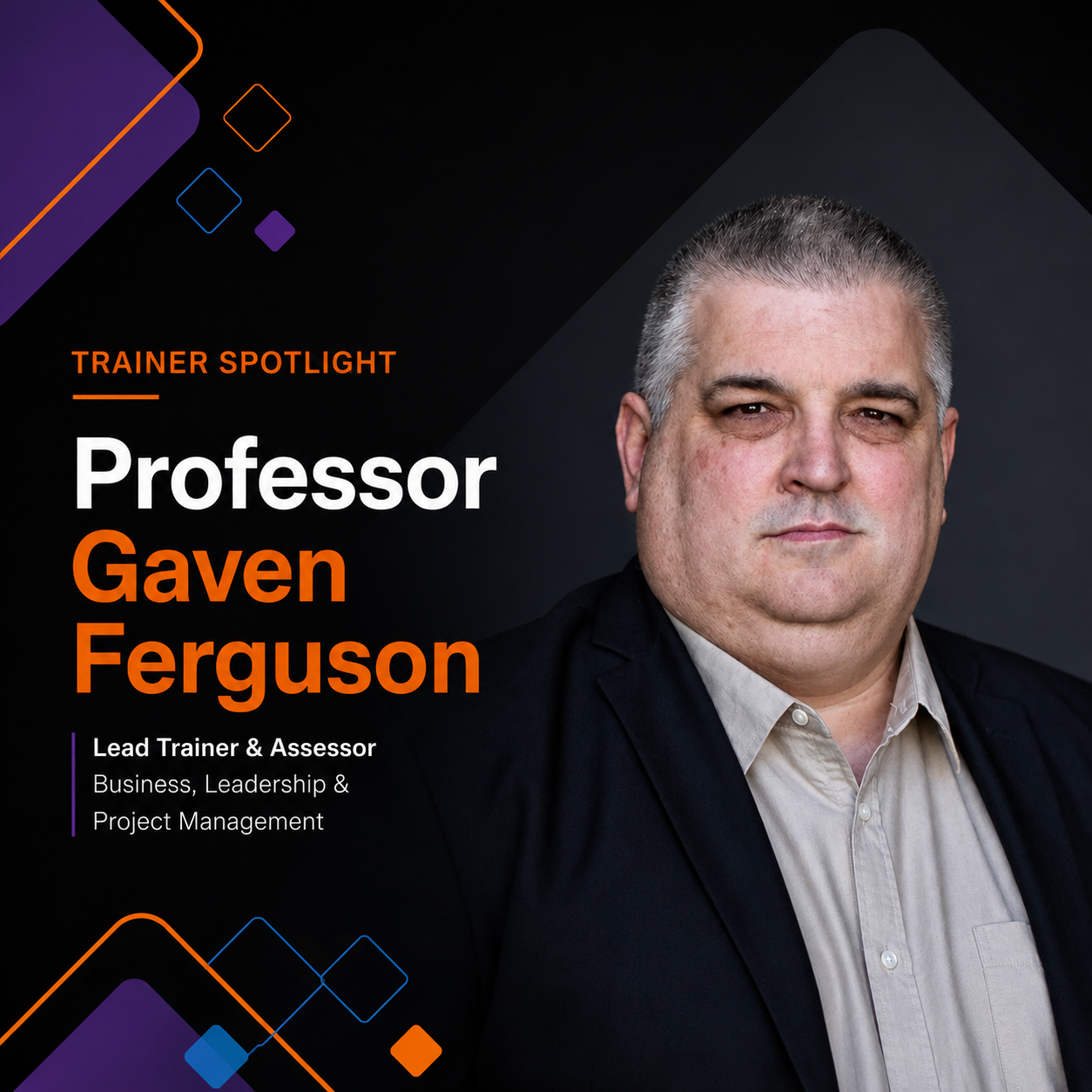
Professor Gaven Ferguson is S2C Training’s Lead Trainer and Assessor for Business, Leadership and Project Management. With expertise in vocational education, RPL and professional recognition, he helps students turn real-world experience into nationally recognised outcomes.

Meet - Professor Gaven Ferguson.

At S2C Training, our students are supported by trainers and assessors who bring genuine industry experience, practical insight, and a strong understanding of nationally recognised training. Professor Gaven Ferguson is our Lead Trainer and Assessor for Business, Leadership and Project Management, supporting students to turn their workplace experience into recognised outcomes.

Professor Ferguson brings a broad professional background across vocational education, business, leadership, project management, hospitality, entrepreneurship, and professional recognition. His career has centred on helping individuals and organisations build capability, strengthen performance, and better understand the value of real-world skills.

A key part of Professor Ferguson’s expertise is Recognition of Prior Learning. With extensive experience in RPL assessment, evidence review, competency mapping, and professional recognition, he understands how to identify and validate the skills people have developed through work, leadership, projects, business operations, and industry experience. This practical understanding helps students feel more confident as they move through the RPL process.

For students, this means their experience is reviewed by someone who understands both the training framework and the realities of the workplace. Professor Ferguson brings a balanced approach to assessment: focused on quality evidence, compliance, fairness, and genuine recognition of capability.

His background in business, leadership, and project management also allows him to support students beyond the assessment process. Whether a student is formalising years of management experience, building confidence in their leadership capability, or seeking recognition for project-based work, Professor Ferguson brings the insight needed to connect their experience with nationally recognised qualification pathways.

Known for his practical and student-focused approach, Professor Ferguson is passionate about helping people recognise the value of what they already know and have achieved. His work reflects a clear belief that experience matters, skills should be properly recognised, and education should create meaningful opportunities for individuals, businesses, and industry.

Through his role with S2C Training, Professor Ferguson continues to support students in taking the next step in their professional journey - turning real-world experience into recognised qualifications and clearer career pathways.

Need to Know

How to Choose an RPL Provider: 7 Questions to Ask | S2C Training

Not all RPL providers work the same way. Ask these seven questions before you enrol, from RTO status and assessor experience to fees, timeframes and gaps.

The quick answer

Recognition of Prior Learning (RPL) is a regulated assessment process, but providers differ widely in how they deliver it. Before you enrol, check seven things: whether the provider is the Registered Training Organisation (RTO) that issues the qualification, whether the qualification is nationally recognised and on the provider's scope, what the assessment process involves, who the assessors are, what the fees and payment terms are, how long the process realistically takes, and what happens if your evidence does not cover everything. You can verify any provider and qualification on training.gov.au, the national register.

Choosing well matters. The right provider makes the process straightforward and the outcome credible. The wrong one costs you time, money and sometimes a qualification that does not hold up to scrutiny. Here are the seven questions worth asking, and why each one matters.

1. Are you the RTO that will issue my qualification?

Only a Registered Training Organisation can assess RPL and issue a nationally recognised qualification. Some businesses that advertise RPL services are not RTOs themselves; they operate under arrangements with a separate RTO that carries out the assessment and issues the certificate. That model is legal and regulated, but you should know who actually holds responsibility for your assessment, your records and your certificate before you pay anyone.

Ask for the RTO's registration number and look it up on training.gov.au, the Australian Government's national register. The listing shows the RTO's registration status and every qualification it is approved to deliver. S2C Training is a Registered Training Organisation in its own right, RTO 45605, which means we assess your evidence and we issue your qualification. One organisation, accountable end to end.

2. Is the qualification nationally recognised and on your scope?

A qualification only carries weight if it sits within the Australian Qualifications Framework (AQF) and appears on the issuing RTO's scope of registration. Scope matters: an RTO can only issue qualifications it is registered to deliver, and qualification codes are updated over time as training packages change.

When a provider quotes a qualification, check two things on training.gov.au: that the qualification code is current rather than superseded, and that it appears on that RTO's scope. If a provider offers a qualification that has been superseded, ask why.

3. What does the RPL process actually involve?

RPL is an assessment, not a paperwork formality. A credible provider will explain how your skills, knowledge and experience are assessed against the requirements of the qualification, what kinds of evidence you will need to provide, and how an assessor makes their decision. Evidence typically includes things like position descriptions, work samples, service or employment records, references and prior certificates, and a competency conversation with an assessor is common.

Be cautious of any provider that suggests the outcome is guaranteed, that no real evidence is needed, or that a qualification can simply be purchased. Under the Standards for RTOs, assessment decisions must be based on evidence of competency. A provider promising a certificate regardless of evidence is a warning sign, and a qualification issued that way may not survive an audit or an employer's scrutiny.

4. Who will assess my evidence, and do they understand my background?

Assessment quality depends on the assessor's ability to read your experience accurately. This matters most when your evidence does not look like a standard civilian CV. Service records, rank and posting histories, operational documents and emergency services experience all need an assessor who knows what they are looking at.

Ask who conducts the assessments and what experience they have with backgrounds like yours. At S2C Training we specialise in veterans, ex-services and ex-emergency-services students, and we have ex-serving members on our team, so your evidence is read by people who understand the environment it came from.

5. What are the fees, and what am I asked to pay upfront?

You should be able to get a clear, itemised picture of the total cost before you commit, including what the fee covers, what payment options exist and what the refund arrangements are. Australian consumer protections in vocational education also limit how much an RTO can collect from an individual student before services are delivered, so be wary of any provider asking for the full fee of a large enrolment upfront.

Ask for the provider's fee schedule and refund policy in writing. A provider that is transparent about money before enrolment is usually transparent everywhere else.

6. How long will it realistically take?

Timeframes vary with the qualification, the quality of your evidence and how quickly you can supply anything that is missing. A provider should give you a realistic range rather than a flat promise, because an honest answer depends on your circumstances. At S2C Training, RPL assessments typically take between 14 and 28 days once your evidence is in, though individual timeframes depend on the qualification and the completeness of your evidence.

Very fast promises deserve the same scrutiny as very cheap ones. Assessment takes the time it takes to be done properly.

7. What happens if my evidence does not cover everything?

RPL does not always result in a full qualification, and a good provider is upfront about that. Ask what happens if gaps are identified: whether partial recognition is available through a statement of attainment for the units you have demonstrated, whether gap training is offered to complete the remaining units, and what the costs of those options are.

A provider that explains the gap scenario before you enrol is showing you how they handle assessment honestly. One that never mentions the possibility is worth questioning.

A quick checklist before you commit

Looked the RTO up on training.gov.au and confirmed its registration and scope
Confirmed the qualification code is current, not superseded
Received a clear explanation of the evidence and assessment process
Asked who the assessors are and whether they understand your background
Received the fee schedule and refund policy in writing
Been given a realistic timeframe, not a guarantee
Understood the options if gaps are identified

Frequently asked questions

How do I check if an RPL provider is legitimate?

Search the provider's RTO number on training.gov.au, the Australian Government's national register. It shows whether the RTO's registration is current and which qualifications it is approved to deliver. If the business advertising RPL is not listed, ask which RTO will actually assess your evidence and issue your qualification.

Is a qualification gained through RPL the same as one gained through study?

Yes. RPL is a recognised assessment pathway under the Australian Qualifications Framework, and the qualification issued is the same nationally recognised qualification regardless of the pathway. What differs is how competency is demonstrated: through evidence of existing skills and experience rather than through coursework.

Can an RPL provider guarantee I will get the qualification?

No. An RPL outcome depends on an assessment of your evidence against the qualification's requirements. Any provider guaranteeing an outcome before seeing your evidence is a warning sign.

What is a scope of registration?

An RTO's scope of registration is the list of qualifications and units it is approved by the regulator to deliver and assess. It is public and searchable on training.gov.au. An RTO cannot issue a qualification outside its scope.

Does S2C Training offer RPL?

Yes. S2C Training (RTO 45605) offers RPL pathways across our nationally recognised qualifications, with a free, obligation-free Skills Check as the first step. We specialise in veterans, ex-services and ex-emergency-services students, and our team includes ex-serving members.

Start with a Skills Check

If you are weighing up RPL, our obligation-free Skills Check is a practical way to test the fit before committing to anything. We will map your experience against nationally recognised qualification options and give you clear guidance on your pathway. Call (07) 3555 7703 or email info@s2c.edu.au.

Need to Know

CTT Funding for RPL | Defence Transition Training Explained | S2C Training

Career Transition Training (CTT) can contribute up to $5,320 towards approved training, including RPL. Learn how DFTP funding works and how to apply.

DFTP and CTT Explained: Using Defence Transition Funding for Skills Recognition

The quick answer

Career Transition Training (CTT) is part of the Defence Force Transition Program (DFTP). It can contribute up to $5,320 towards approved education and training that supports your post-service employment goals, and this can include Recognition of Prior Learning (RPL) with a Registered Training Organisation. You can apply while still serving or for up to 24 months after separation, and access is arranged through your ADF Transition Coach. Approval is determined by Defence, not by training providers.

If you are planning your transition, understanding this funding before you separate can make a significant difference to what your next step costs you.

What is the Defence Force Transition Program?

The Defence Force Transition Program (DFTP) is the Department of Defence program that supports permanent and reserve ADF members through the move to civilian life. Every member transitions through a Transition Centre, where a Transition Support officer or Transition Coach works with you to build a personalised transition plan.

DFTP covers a range of supports, including coaching, transition seminars and approved absence for transition activities such as job interviews. The element most relevant to skills recognition is Career Transition Training.

What is Career Transition Training (CTT)?

CTT is a financial contribution of up to $5,320 towards training and upskilling that supports your employment or meaningful engagement goals after service. Where your Transition Coach identifies a training need, CTT can fund education and training delivered by providers such as Registered Training Organisations. Limited support may also be available for travel to attend training.

Three points matter here:

• The funding is capped. Any training costs above the approved amount are your responsibility, so it pays to choose a pathway where the funding goes furthest.

• Access runs through your Transition Coach. CTT is requested in consultation with your coach, currently via web form AC853-3, and approval sits with Defence. No training provider can approve or guarantee CTT funding, including us.

• The window extends past separation. You can apply while serving or for up to 24 months after leaving the ADF. If you are medically separating and cannot undertake training at the time, you may apply to preserve the benefit for later.

Can CTT funding be used for RPL?

Yes, where it is approved as part of your transition plan. Recognition of Prior Learning is an assessment pathway offered by Registered Training Organisations, and it is a form of vocational education and training activity that CTT funding can be directed towards when your Transition Coach identifies it as supporting your employment goals.

For many ADF members, RPL is a strong fit for transition funding because it is typically faster and lower-cost than completing a full course, which means the funding contribution stretches further. Rather than paying to be retrained in skills you built during your service, RPL assesses the evidence of what you already do, such as your service record, course reports, position descriptions and workplace documents, against the requirements of a nationally recognised qualification.

Important: eligibility for a qualification through RPL always depends on an individual assessment of your evidence. Neither CTT approval nor an RPL application guarantees a qualification outcome.

How do I apply for CTT funding?

The process runs through Defence, and it starts earlier than most people expect:

Engage your Transition Centre. All members transition through a Transition Centre, so make contact as soon as transition is on your horizon.
Work with your Transition Coach. Your coach helps identify your post-service employment goals and whether a training need supports them. Come to this conversation with a clear career direction, because applications are assessed against your stated goals.
Identify the training or RPL pathway. This is where a quote or proposal from your chosen provider comes in. If you are considering skills recognition, our obligation-free Skills Check can identify which nationally recognised qualifications your service experience may align with, which gives your coach something concrete to assess.
Submit the request. Your coach lodges the CTT request through the Defence process. Approval must be in place before you commit, as retrospective approval is generally not available.

What should I ask before choosing a provider?

Whichever provider you consider, and whatever funding you use, it is worth checking:

Is the provider the Registered Training Organisation that will issue the qualification, and what is its RTO number? You can check any RTO on training.gov.au. S2C Training is RTO 45605.
Does the provider have experience assessing Defence evidence such as service records, course reports and PMKeyS documents?
Is the qualification nationally recognised, and does it match the direction stated in your transition plan?
Is pricing clear enough to support a funding application?

Where S2C Training fits

S2C Training is a Registered Training Organisation (RTO 45605) built around veterans, ex-services and ex-emergency-services students, with ex-serving members on our team. We offer RPL pathways across our nationally recognised qualifications, and our free Skills Check is a practical first step before you speak with your Transition Coach: it maps your service experience against qualification and training options, so your CTT conversation starts with specifics rather than guesswork.

S2C Training is not affiliated with the Department of Defence, and we cannot approve, guarantee or advise on CTT funding decisions. Your Transition Coach and Transition Centre are the right contacts for funding eligibility.

Frequently asked questions

How much CTT funding can I access?

CTT can contribute up to $5,320 towards approved training. Costs above the approved amount are your own responsibility, and the figure is set by Defence and subject to change, so confirm the current amount with your Transition Centre.

Can I use CTT after I have already left the ADF?

Yes. You can apply for up to 24 months after separation. If you are medically separating and unable to train at the time, ask your Transition Coach about preserving the benefit.

Does CTT funding guarantee I will receive a qualification through RPL?

No. CTT is a funding contribution, and RPL is a separate assessment process. A qualification is only issued where your evidence demonstrates competency against the qualification's requirements.

Who approves CTT funding?

Defence, through your ADF Transition Coach and the Transition Centre process. Training providers, including S2C Training, have no role in the approval decision.

What if my training costs more than the CTT contribution?

You are responsible for the difference. This is one reason RPL is often a practical use of transition funding, as assessment-only pathways generally cost less than full course delivery.

Ready to see what your service adds up to?

Complete our obligation-free Skills Check and we will map your experience against nationally recognised qualification options, giving you a concrete pathway to discuss with your Transition Coach. Call (07) 3555 7703 or email info@s2c.edu.au.