How Military Experience Translates into Civilian Qualifications
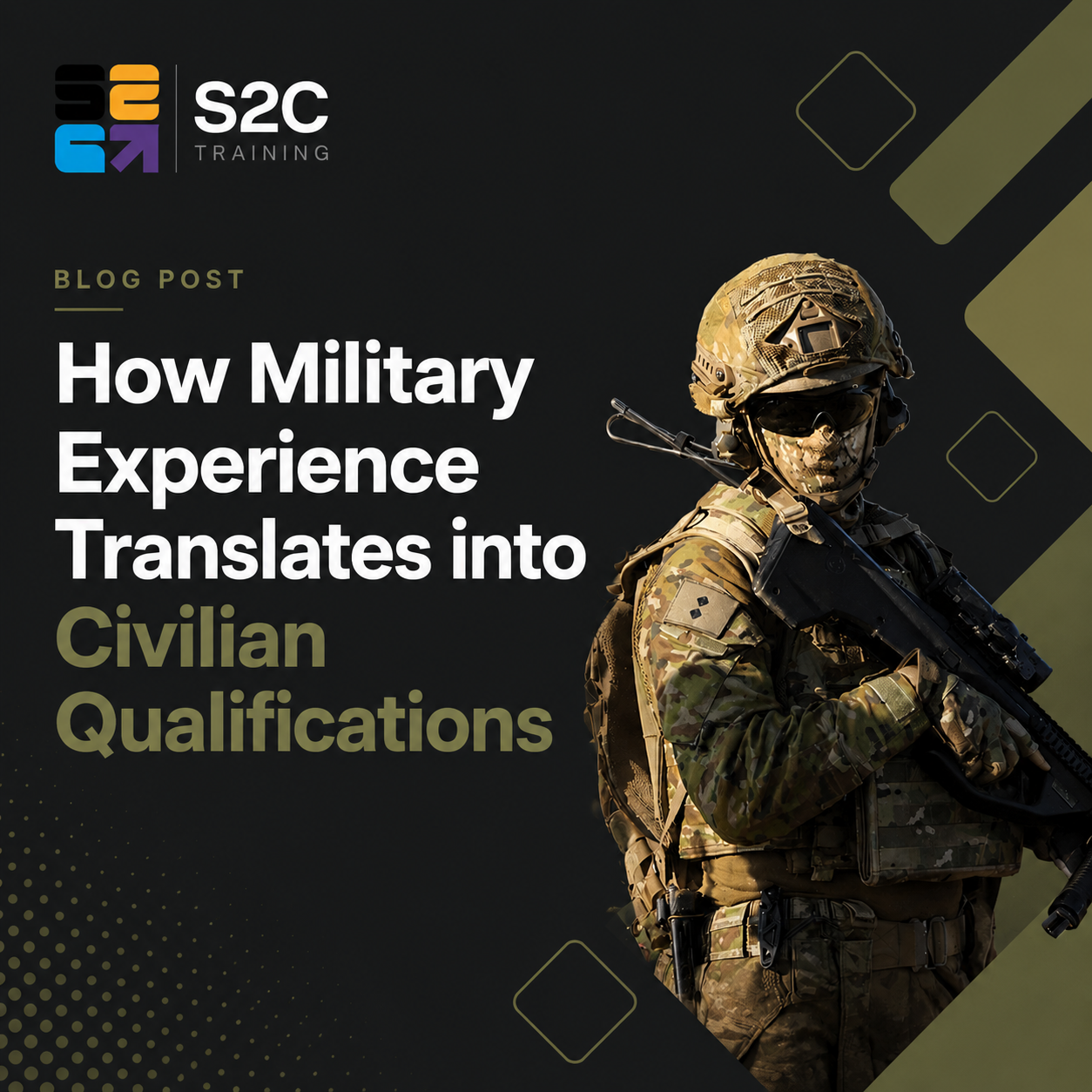
Leaving the Australian Defence Force is one of the biggest transitions a person can make. After years of training, responsibility and operational experience, many veterans face an unexpected hurdle: the civilian world often asks for a piece of paper to prove what you can already do. The frustrating part is that you almost certainly already have the skills - they just haven't been formally recognised yet.
This guide explains how military experience translates into nationally recognised civilian qualifications, which skills tend to map across, how to choose the right qualification for the career you actually want, and how Recognition of Prior Learning (RPL) can turn your service into credentials employers understand.
Why military skills don't always translate on paper
The ADF builds capability to an exceptionally high standard - but it does so in its own language. Ranks, mustering, trade qualifications and service courses make complete sense within Defence, yet civilian employers and recruiters often don't know how to read them. A role that involved leading teams, managing complex logistics or coordinating high-stakes operations can look, on a civilian resume, like a job title they don't recognise.
The result is a translation gap. The skills are real and transferable; the challenge is expressing them in terms the civilian labour market values - and backing them with a recognised qualification. That is exactly the gap RPL is designed to close.
Translating rank and roles for civilian recruiters
A service record doesn't always read clearly to a civilian hiring manager. Ranks, postings and service courses carry enormous meaning inside Defence, but someone outside it may not grasp the scale of responsibility they represent.
Part of turning service into a civilian asset is learning to describe it in civilian terms. “Led a section” becomes “managed and developed a team.” “Coordinated a resupply” becomes “managed logistics and inventory across multiple sites to deadline.” The work is the same; the vocabulary is what changes.
A nationally recognised qualification does some of this work for you, because it states your capability against a standard the civilian market already understands - which removes the guesswork for an employer reading your application.
Start with your goal, not the qualification
It is tempting to begin by collecting qualifications, but the most effective approach works backwards from the career you want. Defence's own transition guidance emphasises aligning training with a specific post-separation goal rather than taking a scattergun approach, and that is sound advice generally.
Once you know the kind of role you are aiming for, the right qualification usually becomes clear - and any funding you apply for is far easier to justify. A useful starting point is to think about what you genuinely enjoyed in service, and what you want more of next.
Which skills tend to map across?
Almost every role in the ADF develops capability that can map onto civilian qualifications. The areas below are common examples of where service experience often aligns with the qualifications we offer, though the right match always depends on your individual background - which is what an assessment is for.
Leadership and management
Few environments develop leaders the way military service does. From early in their careers, ADF personnel are trained to lead, take responsibility and perform under pressure. Among the most transferable skills are:
- Decision-making under pressure - making sound calls quickly, often with incomplete information and real consequences.
- Team leadership - leading, motivating and developing people towards a shared objective.
- Mentoring and development - bringing on junior personnel and building capability in others.
- Planning and coordination - organising people and resources to achieve complex goals.
- Accountability - owning outcomes and holding a team to a standard.
- Communication - giving clear direction and briefing effectively up and down a chain of command.
These are not abstract qualities. They are practised daily in service, frequently at a scale and intensity that civilian managers rarely experience so early in their careers. They map naturally onto qualifications in leadership and management, from supervisory-level certificates through to strategic leadership at the senior end.
Project management
Planning and executing operations, coordinating resources, managing risk and delivering to a deadline are the essence of project management. Defence personnel often run projects of a scale and complexity that would impress any civilian project office, even if nobody called it “project management” at the time.
Logistics and supply chain
Military logistics is among the most demanding in the world - moving people, equipment and supplies across challenging environments with little margin for error. Those skills can map well onto civilian supply chain and operations roles, an area of strong and growing demand.
Work health and safety
Safety is embedded in everything the ADF does. Risk assessment, hazard management, compliance and a genuine safety-first culture are second nature to most service personnel, and they align closely with formal work health and safety qualifications.
One practical note: some states and territories require specific qualifications for certain WHS roles, and additional licensing may apply depending on where you work. It is worth checking the requirements with your relevant state or territory regulator before settling on a pathway.
Health administration
For those drawn to the healthcare sector, administration and practice management offer stable, people-focused civilian careers that value exactly the organisation and coordination skills service builds.
Business administration
Nearly every role in service develops administrative and coordination capability - records, reporting, scheduling, procurement, briefing. Business qualifications formalise that work, and are often a strong fit for personnel whose experience spans several areas rather than sitting neatly in one.
How RPL turns service into qualifications
Recognition of Prior Learning is the mechanism that makes the translation official. Instead of sending you back to study skills you already have, RPL assesses your existing competency against a nationally recognised qualification and recognises it formally. For veterans, this is often the fastest and most logical route to a civilian credential.
The process typically involves mapping your service experience against the units of a chosen qualification, gathering evidence - service records, position descriptions, courses completed, references and work samples - and having a qualified assessor confirm your competency. Where you meet the standard, you are granted recognition, and the qualification you receive is identical to one earned through classroom study.
Where you meet most but not all of the requirements, targeted gap training can fill the difference rather than repeating the whole qualification. That is often the difference between a pathway that takes months and one that takes years.
If you are new to the concept, our pillar guide What Is Recognition of Prior Learning (RPL)? A Complete Guide explains the full process. If you are comparing providers, How to Choose an RPL Provider: 7 Questions to Ask covers what to check before you enrol.
Civilian career pathways for veterans
With recognised qualifications behind them, veterans are well placed to move into a wide range of civilian careers. Depending on your service background and the qualifications you pursue, common pathways include:
- Team leader, supervisor and management roles across industries
- Project and program management positions
- Supply chain, logistics and operations roles
- Work health and safety advisor and coordinator roles
- Health administration and practice management
- Business administration and coordination roles
More than one door may be open
Your service rarely points to a single career. The skills you built - leadership, planning, coordination, safety, logistics - are broad and transferable, which means several pathways may genuinely suit you. Some veterans pursue more than one qualification over time, building a civilian profile that reflects the breadth of their experience.
The aim isn't to lock yourself into one option immediately. It is to take a confident first step in a direction that appeals, knowing you can build from there.
Beyond recognition: building on your leadership
For some veterans, RPL recognises leadership they already hold. For others, it is a springboard to grow further.
S2C Training offers professional development programs spanning emerging, senior and executive leadership. Each combines online self-paced learning, structured online tutorials and one-on-one sessions, and each leads to a nationally recognised qualification. Whether you want recognition for the leader you already are, or development towards the role you want next, there is a pathway to suit.
Defence transition support: DFTP and Career Transition Training
Many transitioning members access support through the Defence Force Transition Program (DFTP) - the umbrella program, formerly the Career Transition Assistance Scheme, that Defence uses to support members preparing for civilian life. Within DFTP, the component most relevant to gaining qualifications is Career Transition Training (CTT).
Under CTT, eligible members can receive a financial contribution towards approved training and education to help achieve their post-transition employment or meaningful-engagement goals, with limited travel support available in some cases. Importantly for veterans considering RPL, this funding can be applied to skills recognition where the qualification meets the standard required, provided the training aligns with a specific post-separation career goal. In practice, CTT and RPL work together: the funding helps resource your transition, while RPL converts your service experience into nationally recognised qualifications.
Eligibility, funding amounts and program details are set by Defence and can change over time, so we don't reproduce the full rules here. For current, authoritative information, refer to official Defence transition resources and speak with your Transition Support Officer, accessed through a Defence Transition Centre, who can confirm what you're eligible for and how it applies to your circumstances.
For a fuller explanation of how this funding works alongside skills recognition, see CTT Funding for RPL: Defence Transition Training Explained.
Timing your transition
Where possible, it pays to start thinking about qualifications before you separate rather than after. Service records, position descriptions, course results and references are easiest to gather while you still have ready access to them, and beginning the RPL conversation early means your civilian credentials can be in hand - or well underway - by the time you transition.
If you have already separated, that is no barrier. It simply means gathering your evidence from the records you hold. Either way, the sooner you begin, the smoother the path tends to be.
A note for partners and families
Transition affects families, not just the member. Partners of ADF personnel often have their own rich work and volunteering history that may qualify for RPL. If your household is navigating a transition, it can be worth exploring recognition for both of you - turning two sets of hard-won experience into formal qualifications that support the next chapter.
How S2C Training can help
S2C Training (RTO 45605) began by helping ADF personnel and veterans translate service into civilian qualifications, and that community remains at the heart of what we do. We offer an RPL pathway across every one of our nationally recognised qualifications - including leadership and management, project management, work health and safety, health administration, business and supply chain operations — areas where skills acquired in service often map across well. You can read more about how we support Defence members and veterans.
We speak your language, and we know how to translate it into terms civilian employers recognise.
Common questions from transitioning members
Will my qualification say it was earned through RPL?
No. A qualification gained through RPL is nationally recognised and identical to one earned by course study. There is nothing on the certificate marking it as different.
I didn't do a formal trade - does my experience still count?
Very likely. RPL assesses competency, not job titles. Leadership, coordination, planning and safety skills developed in any role can map onto civilian qualifications, whether or not you held a formal trade.
I've been out for years - is it too late?
Not at all. While recent evidence is ideal, skills built in service and in any civilian work since can both contribute. The starting point is simply to have your experience assessed.
What if I only meet part of a qualification?
That is common, and it is not a dead end. Where you meet most but not all of the requirements, targeted gap training covers the difference rather than requiring you to complete the whole qualification from scratch.
Do I have to choose just one qualification?
Not necessarily. Depending on your experience, more than one qualification may be within reach, and a skills check helps identify the best fit or combination.
Can I start before I separate?
Yes, and it is usually the better option. Starting while you still have easy access to your service records and referees makes the evidence-gathering step considerably simpler.
Take the next step
Ready to find out what your service is worth in civilian terms? Start with a free skills check — the simplest way to see how much of your experience can be formally recognised. It is obligation-free, and it takes less than a minute to begin.
More to explore
Keep reading to find insights that matter to your growth
Start your Qualification Journey Today. Obligation Free.
No guesswork. A clear, supported pathway to recognising your experience - with training only where it's needed.
.png)