How RPL Can Support Workforce Capability
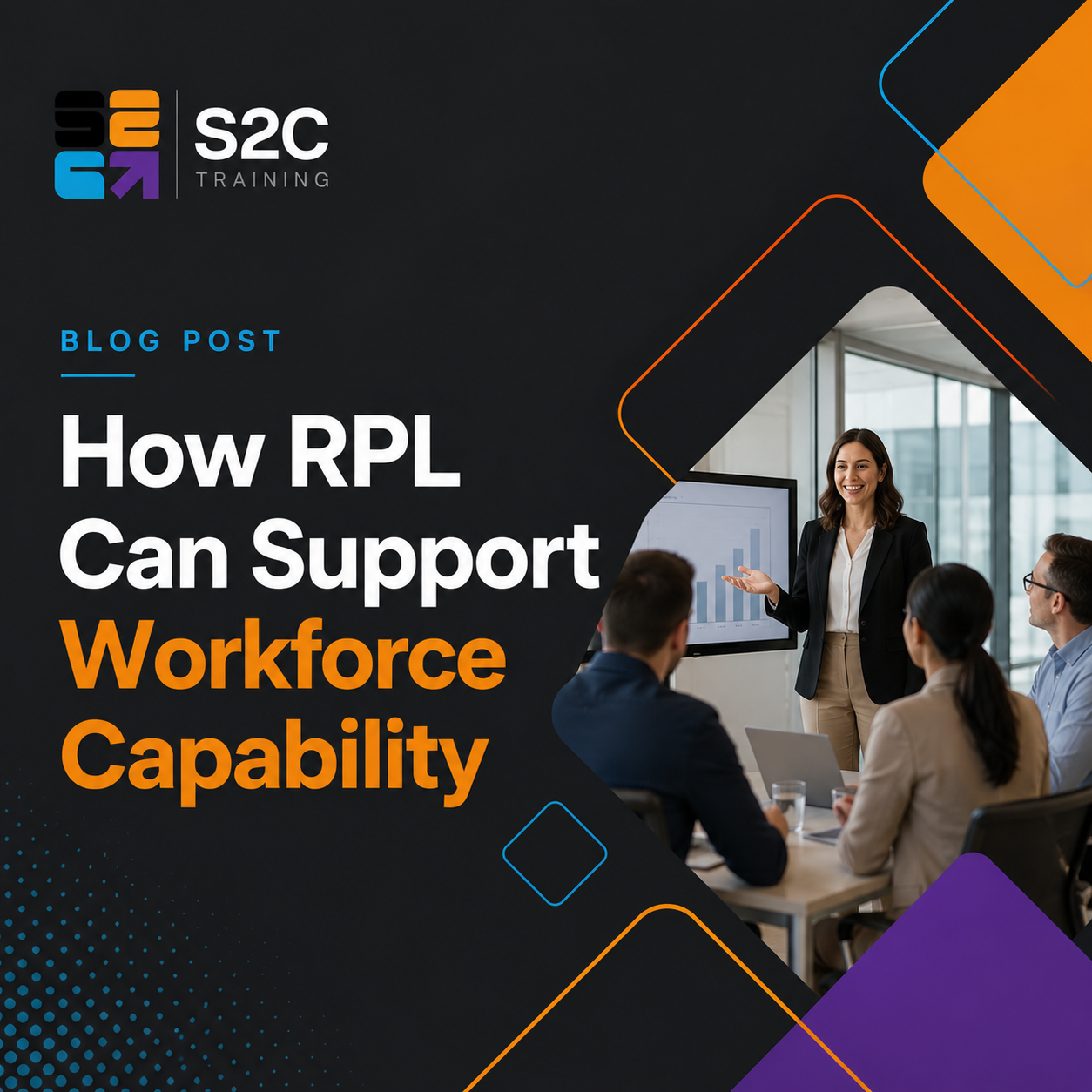
How RPL Can Support Workforce Capability
Most organisations are sitting on more capability than their records show. Across any experienced team, people are leading, managing, coordinating and problem-solving at a high level everyday - often without a formal qualification that captures it. Recognition of Prior Learning (RPL) gives employers a way to formally recognise that hidden capability, close skills gaps efficiently, and build a workforce that’s demonstrably qualified for what it already does.
This guide looks at RPL from an employer’s perspective: what it is, how it supports workforce capability and planning, and how to put it to work in your organisation.
What is RPL, in a workforce context?
Recognition of Prior Learning is a formal assessment process that measures an individual’s existing skills and knowledge against a nationally recognised qualification, and recognises them where the standard is met. For employers, this reframes training: instead of sending experienced staff to learn things they already know, you formally credential the competency they’ve already built on the job.
The result is the same nationally recognised qualification an employee would earn through a full course - achieved faster and with less disruption to the business. For the underlying process, our pillar guide “What Is Recognition of Prior Learning (RPL)?” explains how assessment works.
Why workforce capability matters
Workforce capability is the collective skill, knowledge and capacity of your people to deliver on your organisation’s goals - now and into the future. Strong capability shows up as better performance, lower risk, easier succession and greater resilience when circumstances change. Weak or poorly understood capability shows up as skills shortages, key-person risk and missed opportunities.
The challenge for many employers is visibility. You can’t develop what you can’t see, and informal, undocumented skills are hard to plan around. Formal qualifications turn assumed capability into verified capability - something you can measure, report on and build from.
How RPL supports workforce capability
1. It makes existing capability visible
RPL surfaces the skills already present in your workforce and benchmarks them against national standards. Instead of guessing who can do what, you gain a documented, credentialled picture of your team’s capability - a far stronger foundation for workforce planning.
2. It closes capability gaps efficiently
Because RPL recognises what people already know, any training that follows can target only the genuine gaps. That means less time away from the job, lower training spend and faster results than enrolling experienced staff in full qualifications they mostly don’t need.
3. It strengthens compliance and risk management
In areas like work health and safety, holding the right qualifications isn’t just good practice - it can be essential to compliance and risk management. In fact, some states and territories require specific qualifications for certain roles, such as a workplace health and safety officer, and additional licensing may apply depending on where you operate. Because these requirements vary by jurisdiction and can change, it’s worth checking the rules with your relevant state or territory regulator. RPL offers an efficient route to ensuring the people doing critical work hold credentials that match their responsibilities.
4. It supports retention and engagement
Investing in employees’ formal recognition signals that you value them. A nationally recognised qualification is something people carry with pride, and the act of recognising their capability can strengthen loyalty and engagement - supporting retention in a competitive labour market.
RPL and workforce planning
Used strategically, RPL becomes a workforce-planning tool rather than a one-off exercise. By mapping your team’s current qualifications against the capability your organisation needs, you can identify gaps, plan development, and build clear pathways from operational roles into supervisory and leadership positions.
This pairs naturally with structured development. For more on growing leaders internally, see “Developing Future Leaders Within Your Organisation” and “Workforce Planning and Capability Development"
Getting the most from RPL: practical tips for employers
Employers who get the strongest results from RPL tend to approach it deliberately rather than as a tick-box exercise. Start by being clear about the capability your organisation actually needs, so recognition is tied to business goals rather than done at random. Identify the experienced staff most likely to benefit - often long-serving people whose skills have outgrown their formal qualifications. Communicateclearly that RPL is an investment in them, not a test they might fail, so it’smet with enthusiasm rather than anxiety. And treat it as the first step in anongoing development cycle, pairing recognition of current skills with a plan togrow them.
It also helps to nominate an internal champion - someone in HR, learning and development or operations who can coordinate evidence-gathering, liaise with the RTO and keep the process moving. With a little structure, RPL across a whole team can be remarkably smooth.
Measuring the return on RPL
Like any workforce investment, RPL is easier to justify when you can see its impact. Employers commonly look at a mix of indicators: the number of staff now holding nationally recognised qualifications, reductions in compliance or capability gaps, improvements in internal promotion rates as people become formally qualified for advancement, and retention among employees whose skills you’ve recognised. Over time, a workforce with verified, documented capability is also easier to plan around - making succession, resourcing and tendering for work more straightforward.
Beyond RPL: professional development and leadership
Recognising existing capability is often the starting point, not the finish line. Once you know where your team stands, targeted development builds on that base. S2C Training supports employers with both -RPL to formalise current capability, and professional development programs to grow it further, including a focus on leadership and management.
Our professional development programs combine online self-paced learning, structured online tutorials and one-on-one sessions, so your people can develop without stepping away from the job entirely. Importantly, each program leads to a nationally recognised qualification - and in some cases two - so the development your team undertakes is formally credentialled, not just informally delivered. Our programs include:
• Executive Leadership Program
• Practice Management Essentials
Because the qualifications embedded in these programs are nationally recognised, the capability your team builds is portable, verifiable and valued across industries - the same standard whether achieved through training or recognised through RPL.
Where RPL adds the most value
RPL can support almost any experienced workforce, but a few situations tend to deliver particularly strong returns. Organisations with long-serving staff whose qualifications haven’t kept pace with their responsibilities often find a large pool of recognisable capability. Businesses in qualification-dependent or compliance-heavy areas - such as work health and safety - benefit from efficiently credentialling the people doing critical work. And organisations preparing for growth, restructure or succession gain a clearer, documented view of who is qualified for what, making planning far more reliable.
Employers who recruit from the defence and emergency services communities are also well placed to use RPL. Veterans and former first responders frequently bring high-level skills that map strongly onto civilian qualifications, and recognising that capability early helps these valuable hires settle and progress.
The benefits of nationally recognised qualifications for employers
Bringing it together, RPL and nationally recognised qualifications offer employers a clear set of advantages:
• Verified capability you can measure, report on and plan around.
• Efficient upskilling that targets real gaps and minimises time off the job.
• Stronger compliance in qualification-dependent areas such as WHS.
• Improved retention through visible investment in your people.
• A clearer pipeline from operational roles into leadership.
Partner with S2C Training
S2C Training (RTO 45605) works directly with employers to build workforce capability - recognising the skills already in your team through RPL, closing gaps with targeted training, and developing your future leaders through professional development and leadership programs. We offer an RPL pathway across every one of our nationally recognised qualifications, including business, leadership and management, project management, work health and safety, health administration and supply chain operations.
To explore how RPL and professional development could strengthen your workforce, reach out directly to Jessica Rigney, Business Development Manager, at jessica@s2c.edu.au, for a tailored conversation about your team.
Have individual staff ready t start? They can begin with a free skills check at www.s2c.edu.au
More to explore
Keep reading to find insights that matter to your growth
Start your Qualification Journey Today. Obligation Free.
No guesswork. A clear, supported pathway to recognising your experience - with training only where it's needed.
.png)