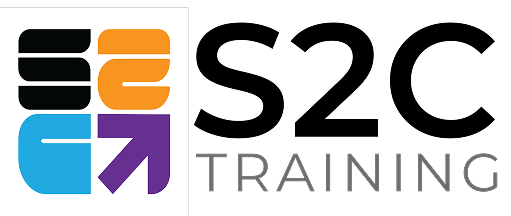
Industry Spotlight - Mining, Resources & Energy in Australia
The quick answer
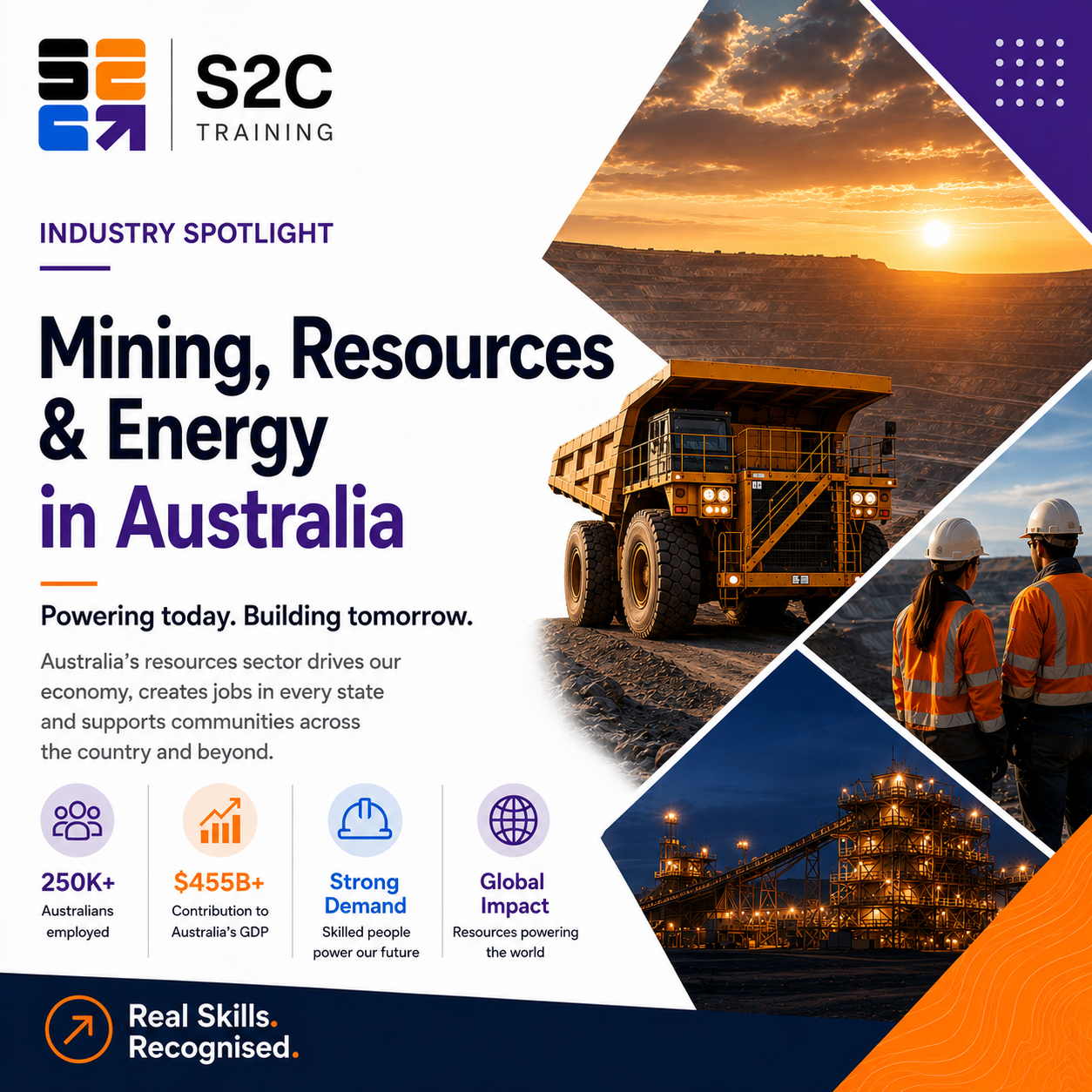
Mining is the highest-paid industry in Australia and the backbone of its exports. It is the main job for around 321,300 people, about 2.2% of the workforce, but with the highest median pay of any industry at $2,649 per week (JSA / ABS, to mid-2025). It is concentrated in Western Australia and Queensland, much of it fly-in fly-out (FIFO) in regional and remote areas, and it faces a serious shortage of skilled workers. Mining doesn't only need drillers and engineers, it runs on safety, project, leadership and operational people too, which is where a recognised qualification, and a background in discipline and teamwork, opens the door.
Workforce size: 321,300 people (2.2% of jobs)
Median full-time earnings: $2,649 per week (highest of any industry)
Where the work is: Mostly WA & Queensland; heavily regional, remote and FIFO
Economy: Resources & energy two-thirds of Australia's exports, 14% of GDP
Where S2C fits: Safety, project, leadership & operational roles - a strong veteran fit
How big is the mining industry in Australia?
By headcount, mining is a relatively small industry: it is the main job for around 321,300 people, roughly 2.2% of the workforce, with only about 4% working part-time and around 21% of the workforce female (JSA industry profile, ABS data to mid-2025). The median age is 41. But by value and by pay, it punches far above its size: median full-time earnings of $2,649 per week are the highest of any Australian industry, well above the all-industries median of around $1,700.
Its largest sector is Metal Ore Mining (around 144,700 workers), followed by mining support services, coal mining, exploration, and oil and gas extraction (JSA, to mid-2025). The largest single occupation is Drillers, Miners and Shot Firers, alongside truck and plant operators, engineers, geologists, metallurgists and a substantial trades and technical workforce. Most jobs are in Western Australia and Queensland, concentrated in regional and remote locations like the Pilbara and Gladstone.
The economic weight is enormous. Australia's resources and energy exports were worth around $385 billion in 2024–25, roughly two-thirds of the country's total merchandise exports and about 14% of GDP (Office of the Chief Economist / ABS data). Australia is the world's largest iron ore exporter and largest lithium producer, and mining supports well over a million more jobs across the equipment, technology and services businesses that surround it.
What is the jobs outlook, and is there a skills shortage?
Mining employment has grown strongly over the long term, and while growth is expected to be steadier rather than booming over the coming years, demand for skilled people remains high. The Minerals Council of Australia describes the industry as facing some of the worst skills and labour shortages in a generation, with severe shortages across occupations from drillers and drivers to engineers, geologists and metallurgists (Minerals Council of Australia).
Two forces are reshaping the workforce. First, technology: mining is becoming more automated and data-driven, lifting demand for digital, technical and analytical skills alongside traditional roles. Second, the energy transition: demand for critical minerals like lithium and copper, and the build-out of new energy projects, is creating fresh, long-run demand for people. The industry is actively investing in training partnerships and new pathways to fill the gap.
Is mining a good industry to get into?
For people who are open to remote or FIFO work, it offers some of the best pay and conditions in the country. A few reasons stand out:
• The highest pay in the country. Median full-time earnings lead every other industry, and many operational roles pay well above the national average.
• Secure, full-time work. The vast majority of mining roles are permanent and full-time, with only around 4% part-time.
• Strong demand for people. With generational skills shortages, capable, safety-minded, reliable workers are genuinely sought after.
• More than trades and engineers. Mining needs safety officers, supervisors, project and operations people, and coordinators, roles open to capable people from many backgrounds.
• A natural fit for ex-service personnel. The roster discipline, resilience and teamwork of FIFO work suit people from defence and emergency-services backgrounds especially well.
The honest challenges: FIFO and remote work mean significant time away from home and demanding rosters, and the lifestyle isn't for everyone. Going in with clear expectations, the right safety mindset and a recognised qualification helps you land the roles and rosters that suit you.
A day in the life: the roles that keep a mine running safely
Mining is far more than operating machinery. Three snapshots show the non-technical roles S2C's qualifications speak to, the people who keep operations safe, coordinated and productive.
The WHS / site safety advisor
Safety is the mining industry's stated number-one value, and for good reason, it is high-consequence work. The site safety advisor runs inductions and toolbox talks, completes risk assessments and inspections, investigates incidents, and keeps the operation compliant. On a mine site, this is one of the most respected and in-demand non-operator roles, and one where getting it right genuinely saves lives.
The supervisor / operations leader
Supervisors coordinate crews, rosters, safety and production across a shift or area, balancing people, targets and standards in a demanding environment. With skilled people scarce, strong operators who can lead a crew are exactly what sites need, and leadership capability is what turns a good operator into a supervisor.
The project / operations coordinator
Mining runs on major projects and complex logistics, from expansions and shutdowns to supply and equipment coordination. Project and operations coordinators keep scope, schedule, budget and resources on track. As the industry takes on critical-minerals and energy-transition projects, these coordination skills are increasingly valuable.
Mining and ex-service personnel: a natural fit
Few career transitions map as cleanly as defence or emergency services into mining. FIFO and remote operations run on exactly the attributes service backgrounds build: comfort with rosters and time away from home, safety discipline, teamwork under pressure, and the ability to follow and enforce procedure. Mining companies increasingly recognise ex-service personnel as a strong source of reliable, safety-minded workers, particularly for supervisory, safety and coordination roles.
For transitioning ADF members and veterans, the move often comes down to translating service experience into civilian-recognised qualifications. See How Military Experience Translates into Civilian Qualifications, Civilian Career Pathways for Veterans and Qualifications for Transitioning Defence Personnel.
Upskilling, training and professional development
Mining rewards people who build recognised capability. On the non-operator side, that often means formalising safety expertise with a WHS qualification, or stepping into leadership, project and business qualifications as you move from crew member to supervisor to operations leadership. In a safety-critical, compliance-heavy industry, recognised qualifications are frequently what unlock the next role and roster.
For people already working in or around mining, resources or heavy industry, Recognition of Prior Learning (RPL) can be the fastest route to a formal qualification. Safety leadership, crew supervision, project and logistics coordination all generate evidence an assessor can map against a qualification, so experienced site people can formalise their capability without starting from scratch.
Where S2C Training fits: qualifications for the mining workforce
S2C Training is a Registered Training Organisation (RTO 45605) that turns real experience into nationally recognised qualifications, delivered through blended online learning and workplace-based assessment and assessed by qualified trainers and assessors. S2C does not deliver mining tickets, high-risk-work licences or trade and engineering qualifications; instead, it credentials the safety, leadership, project and business capability that mining operations equally depend on.
• Certificate IV in Work Health and Safety - for safety representatives and supervisors moving into a dedicated WHS advisor or officer role on site.
• Certificate IV in Leadership and Management and the Advanced Diploma of Leadership and Management - for crew members stepping up to supervisor and operations-leadership roles.
• Certificate IV in Project Management Practice and the Diploma of Project Management - for the people coordinating shutdowns, expansions and complex site projects.
• Certificate IV in Business and Certificate III in Supply Chain Operations - for the administration, logistics and operational-support roles behind every mine.
Each can often be completed via RPL for those with relevant experience, producing a credential that matches the work you already do, and is especially well suited to ex-service personnel translating military experience into civilian qualifications.
Pathway example: from the ADF to a mine-site safety role
"Dan" spent twelve years in the Army, where safety, discipline and leading a team were second nature, and after transitioning wanted FIFO work that used those strengths. Rather than starting from the bottom, he formalised his capability through S2C's Certificate IV in Work Health and Safety via RPL, drawing on the risk management and safety leadership he'd practised for years in uniform. With a nationally recognised qualification and a service background mining employers value, Dan moved into a site safety advisor role on a WA operation.
Where to from here
Mining is Australia's highest-paid industry and the engine of its exports, and it needs far more than operators and engineers, safety, leadership, project and coordination capability are in real demand. If you already work in or around the industry, or you're transitioning from defence or emergency services, the fastest move is often to get your skills formally recognised.
Complete a free skills check with S2C Training to see how your experience maps to a nationally recognised qualification for the resources sector.
Frequently asked questions
How much do mining jobs pay in Australia?
Mining is the highest-paid industry in Australia, with median full-time earnings of around $2,649 per week, well above the all-industries median of about $1,700, according to Jobs and Skills Australia and ABS data to mid-2025. Many operational roles pay well above the national average.
How many people work in mining in Australia?
Around 321,300 people have their main job in the mining industry, about 2.2% of the workforce, concentrated in Western Australia and Queensland. Although it is a relatively small employer by headcount, mining supports well over a million more jobs across equipment, technology and services businesses.
Is there a skills shortage in mining?
Yes. The Minerals Council of Australia describes the industry as facing some of the worst skills and labour shortages in a generation, spanning drillers, drivers, engineers, geologists and metallurgists, as well as growing demand for digital and safety skills as operations automate.
Can you work in mining without a trade or degree?
Yes. While many technical roles require tickets, licences or degrees, mining also relies on safety officers, supervisors, project and operations coordinators and support staff. These roles are open to capable people from many backgrounds, supported by qualifications in work health and safety, leadership and project management.
Is mining a good career for veterans and ex-defence personnel?
Very much so. FIFO and remote mining work suits the roster discipline, safety mindset and teamwork that defence and emergency-services backgrounds build. Mining employers increasingly value ex-service personnel, particularly for safety, supervisory and coordination roles, and Recognition of Prior Learning can turn service experience into recognised qualifications.
What is FIFO work in mining?
FIFO (fly-in fly-out) means workers travel to a remote mine site for a set roster, live in on-site accommodation while working, then fly home for their days off. It is common in Australian mining because many operations are in remote areas of Western Australia and Queensland, and it typically comes with higher pay to offset time away from home.
Sources & further reading (for your records)
• JSA - Mining industry profile: https://www.jobsandskills.gov.au/data/occupation-and-industry-profiles/industries/mining
• ABS - Mining statistics: https://www.abs.gov.au/statistics/industry/mining
• Minerals Council of Australia - Workforce, innovation and skills: https://minerals.org.au/policies/workforce-innovation-and-skills/
• JSA - Employment projections (to May 2035): https://www.jobsandskills.gov.au/data/employment-projections
More to explore
Keep reading to find insights that matter to your growth

Start your Qualification Journey Today. Obligation Free.
No guesswork. A clear, supported pathway to recognising your experience - with training only where it's needed.
.png)